



Energy and Sustainable Development MSc in Dubai
Masters
1 year full-time, 2 years part-time
89,250 AED
<p>As society, industries, and policymakers recognize the urgent need for change to tackle climate change and promote sustainable development, the Energy and Sustainable Development MSc at DMU equips you with the knowledge and skills to drive this transformation. This program explores how to achieve sustainable development and decarbonisation through energy efficiency, improved production methods, and organizational change. You will learn from leading experts and academics in the field, gaining the expertise necessary to foster positive change within businesses, communities, organizations, and governments. This course is perfect for those with backgrounds in social sciences, physical sciences, or engineering, as well as mid-career professionals with relevant experience.</p>



Flexible Study Options
This programme is designed to offer flexibility, allowing you to choose from on-campus, part-time, or full-time study options that fit your personal and professional commitments.You will gain in-depth knowledge of sustainable development and decarbonisation strategies through sustainable energy solutions, more efficient production processes, and organizational change.

Hands-On Learning and Cutting-Edge Facilities
The curriculum is tailored to provide practical knowledge and expertise for industry careers, incorporating contemporary practices, research projects, and real-world industry issues. You will also have access to state-of-the-art facilities, including advanced laboratories and a high-tech hub for teaching, research, and technology demonstrations.

Expert Guidance
Our experienced programme leaders are dedicated to providing high-quality education and are available to address any questions or concerns regarding the accreditation process or course content.

Industry-Backed Curriculum
Students at DMU Dubai will also benefit from insights and guidance from the Industry Advisory Board, ensuring that the curriculum stays aligned with current industry trends.
Block Teaching Advantage
The block teaching format offers a streamlined learning experience, enabling you to focus on one subject at a time, receive quicker feedback, and maintain a healthier study-life balance.
Explore The Best University Options For This Course
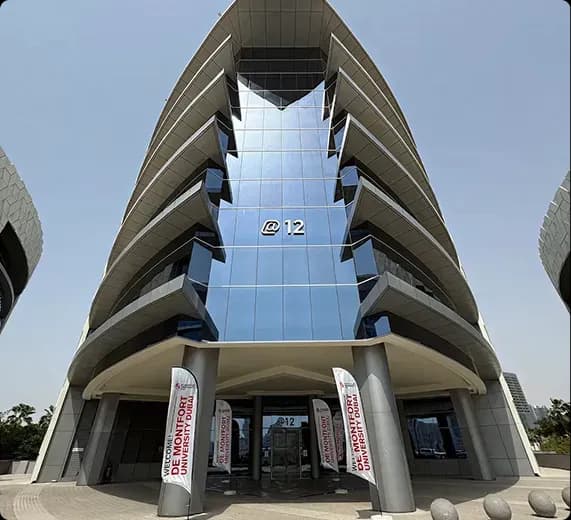
De Montfort University, Dubai
Dubai,UAE

The university's first overseas campus outside of the United Kingdom is De Montfort University (DMU) Dubai, which was inaugurated in 2021. This campus, which is situated in Dubai ....
Universities in the UAE



Study Energy and Sustainable Development MSc in Dubai
Lead the Energy Transition
Global Sustainability Hub: Benefit from studying in a city that is actively investing in regional renewable energy and green innovation.
Strong Industry Exposure: Being near international energy firms and government eco-friendly programs creates a hands-on learning environment.
International Learning Environment: A varied student population provides a global perspective on shared climate and development challenges.
Strategic Geographic Location: Dubai’s status as an international hub provides insight into various energy markets.
Career-Focused Ecosystem: The local economy supports networking and practical learning aligned with global sustainability goals.
Academic Background Review: Applicants require a relevant undergraduate degree or equivalent professional experience.
Application Submission: Complete the online application process by providing your academic history and personal information.
Statement of Purpose: Outline your career objectives and your motivation for specialising in sustainability.
Supporting Documents: Prepare your transcripts, ID, and proof of English proficiency if your previous education was not in English.
Offer and Enrollment: After approval of your application, you will receive an offer letter for the enrollment process.
Future-Ready Skill Development: Master the strategies and technical systems required for modern climate-focused decision-making.
Cross-Disciplinary Knowledge: Develop problem-solving skills by integrating perspectives from engineering, economics, and public policy.
Leadership Preparation: Acquire management skills necessary for steering sustainability initiatives across various organisations.
Global Career Relevance: The expertise gained is universally applicable across international green-energy markets.
Purpose-Driven Education: Prepare for a career that contributes directly to global environmental protection and responsible growth.
Sustainability Manager: Leads organisational sustainability strategies, carbon reporting, and long-term environmental performance improvements.
Renewable Energy Project Manager: Manage the planning and execution of clean energy infrastructure projects.
Climate or Energy Analyst: Analyse emissions data and energy trends to offer evidence-based policy recommendations.
Sustainability Consultant: Advises organisations on ESG compliance, sustainability frameworks, and environmental risk management.
Resource and Circular Economy Specialist: Develop systems that focus on waste reduction and resource efficiency in production.
Frequently Asked Questions
01
Who is this programme suitable for?
It is designed for graduates and mid-career professionals with backgrounds in science, engineering, or the social sciences who want to focus on sustainability.
02
Are practical projects included in the curriculum?
Yes. Applied research, case studies, and hands-on sustainability challenges are key components of the learning experience.
03
Does the course focus more on policy or technical skills?
The programme combines technical expertise in energy with skills in policy, governance, and strategic sustainability.
04
What industries value this qualification?
Graduates find opportunities in energy, construction, finance, consulting, manufacturing, and public policy.
05
Does the course support careers outside the energy sector?
Yes. Sustainability skills are increasingly needed in nearly every industry, not just those directly involved in energy production.
© All rights reserved. StudyFinder.
Powered by SpiderWorks